


ERDINGER 0.0% 高端无酒精 等渗 小麦啤酒
ERDINGER 0.0% 高端无酒精 等渗 小麦啤酒
走进上巴伐利亚跳动的核心地带。
在这片历史与自然交汇之地,Erdinger 揭开了最珍贵的秘密:
隐藏于百年酒厂腹地的两口私人深井,宛如家族珍宝般被世代守护 。
这些晶莹剔透的泉水,远不只是“水”。
它们承载着几个世纪以来的纯净、传承与酿造工艺,
是 Erdinger 啤酒真正的生命之源 🏰。
每一滴泉水,都蕴含着
ERDINGER 0.0% 无酒精小麦啤酒的独特基因。
遵循 1516 年《啤酒纯净法》,
由酿酒世家以匠心与热忱酿就的金色佳酿 🍺。
为运动者、鉴赏家与探索者而生。
这不仅是一款饮品,
而是一段融合维生素 B 群、轻盈口感与纯正风味的
等渗感官之旅 。
一口之间,焕醒身体,滋养心神。
成熟小麦的金色光泽,
青苹果与榛子的清新香气,
泡沫细腻紧致,如阿尔卑斯山峰般纯净。
ERDINGER 0.0% 无酒精小麦啤酒
证明了:无酒精,也可以成为令人屏息的艺术 🌟。
无法加载取货服务可用情况
可折叠内容
感官特征
外观 👁️
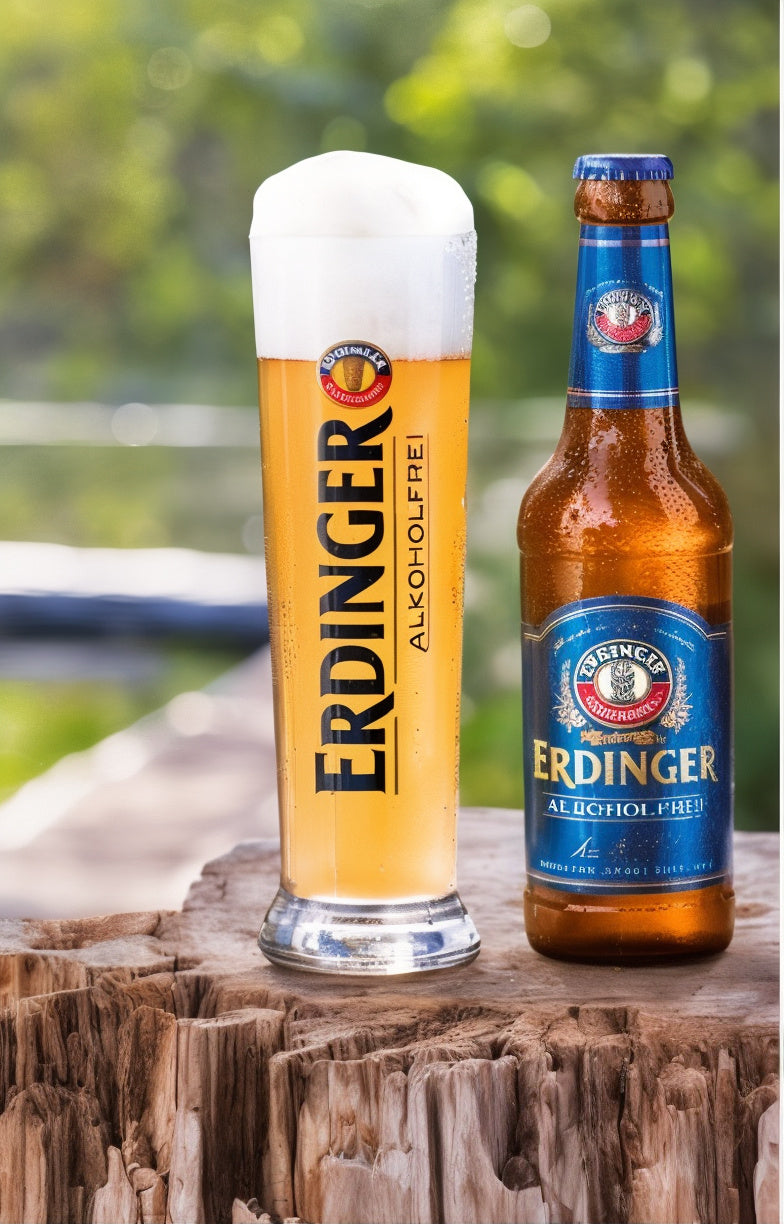
成熟小麦般的明亮金色,清澈纯净。
泡沫细腻紧致,稳定持久,如阿尔卑斯山峰般挺拔。
香气 👃
清新的青苹果与谷物香气率先呈现。
随后浮现淡雅的榛子与酵母气息,整体干净而优雅。
口感 👄
入口轻盈清爽。
等渗结构带来良好的平衡感,小麦的柔和风味与果香自然融合,
即使无酒精,依然保持良好的层次与结构。
余味 ✨
收尾干净利落。
细腻的麦芽香在口中缓缓延展,留下清新而持久的回味。
美食搭配与品鉴建议
🍽️ 食物搭配与品鉴建议
🥑 全麦吐司配牛油果、溏心蛋与粉红胡椒
灵感源自伦敦都市早午餐的时尚搭配。
顺滑与清新的口感完美呼应小麦啤酒的果香层次 🌆。
🥗 法罗麦沙拉配菲达奶酪、薄荷与橙皮屑
轻盈却富有风味,与啤酒清爽的柑橘气息形成自然共鸣 🌿🍊。
🧀 柔和山羊奶酪或年轻阿西亚戈奶酪
细腻柔滑的质地,优雅衬托麦芽的坚果与果香核心 🧀🍺。
🥨 温热的碱水面包或多谷物扁面包
适合屋顶小酌或都市轻食的经典啤酒花园之选 ☀️。
🍏 苹果肉桂挞
与小麦啤酒中的苹果与香料细节形成天然而精致的呼应 🍎✨。
🌡️ 理想饮用温度 : 6–7 °C.
✔️ 充分展现果香、平衡感与泡沫质地
❌ ≤5 °C :抑制香气,苦味更明显
❌ ≥8 °C :清爽度下降,甜感增强,适饮性降低
成分、营养成分表与瓶身规格
配料 :
水,小麦麦芽,大麦麦芽,啤酒花,酵母,二氧化碳
过敏原 :
大麦,小麦
营养成分(每100毫升) :
能量 :107 kJ / 25 kcal
面包单位 :0.45 BE
脂肪 :0 g
> 其中饱和脂肪 :0 g
碳水化合物 :5.3 g
> 其中糖 :3.6 g
蛋白质 :0.4 g
盐 :0 g
酒精含量 :<0.5%
苦味值(IBU) :17
叶酸(维生素 B9) :10 μg(5%)
维生素 B12 :0.13 μg(5.2%)
多酚 :30 mg
包装规格 :
容量 :0.33 L
尺寸(宽 x 高) :6 x 24 cm
包装类型 :深棕色玻璃瓶
封口 :皇冠瓶盖
* 每日营养参考值基于 2,000 千卡饮食,个人需求可能有所不同。
开瓶后保质期 :
建议当日饮用
生产工艺与脱醇方法
Erdinger is the typical German, or rather, Bavarian wheat beer. Erdinger is brewed by the brasserie of the same name according to the specification issued in Bavaria back in 1516 to defend the authenticity of beer (Reinheitsgebot seit 1516, the only ingredients used for the brewing of beer must be Barley, Hops and Water). For more than two centuries, the Bavarian royal families had a monopoly on production and the court breweries became the place where brewing methods were studied and perfected. The Erdinger Weissbier brand is still synonymous with typical Bavarian beer today.
This is the typical German, or rather, Bavarian wheat beer. Erdinger is brewed by the brasserie of the same name according .
Erdinger uses only high-quality raw materials starting with the water, which is drawn from two private wells within the brewery. The pleasure experience is completed by the stimulating bitterness of the hop aroma and a touch of a light fruity acidity. This is completed by the fine sparkling carbonic acid.
生产商与品牌历史
In 1886, the 'Weisse Bräuhaus' was founded by Johann Kienle in Erding, in the heart of Upper Bavaria about 30 km north-east of Munich, Germany. In 1930 the brewery is bought by the malt factory F.W. Otto. In 1935 the Managing Director at the time, Franz Brombach, is offered the opportunity to buy the brewery. Annual wheat beer production at the time is around 3,500 hectoliters (hl). In 1949 Franz Brombach names the brewery Erdinger Weißbräu. In 1965 the company is racing ahead: annual production rises to around 40,000 hl. The brewery’s current owner, Werner Brombach, joins the company. His declared intention is to gradually establish and successfully market a nationwide wheat beer brand. In 1971 a successful advertising campaign is launched for the Erdinger Weissbier brand, focusing on its "high quality standards" as a "traditional Bavarian specialty". The new Erdinger jingle "Des Erdinger Weissbier, des is hoid a Pracht..." becomes a German advertising classic. In the 1970s Austria and Italy became Erdinger’s first wheat beer export nations. Today, the mid-size private brewery exports its specialties to 100 countries on five continents. In 1975 following the death of his father, Werner Brombach takes over the family business. Two years later, output reaches around 225,000 hl and Erdinger is market leader. In 1983 a new brewhouse is constructed on the edge of town – there is no longer enough space at the company’s historic base in the middle of the Old Town. Capacity is now almost 600,000 hl, but a second building is soon needed to expand capacity further. In 1990 Erdinger passes the magic 1-million hectoliter mark for the first time! In 2001 repositioning of Erdinger Alkoholfrei as an isotonic thirst-quencher for sports enthusiasts. Just five years later, Erdinger Alkoholfrei is the market’s number 1 Alkoholfrei beer. In 2008 after two years of construction, the Erdinger Weißbräuhof is re-opened. The Brombach family’s faithfully restored base is now home to the brewery’s HQ, a pub and a four-star hotel. In 2016 130-year brewery anniversary: Erdinger Weißbräu has stood for cultivated Bavarian wheat beer enjoyment and maximum enjoyment for 130 years now. In 2017 the new bottling plant goes into operation. Two new bottling lines and the modernization of an existing line create additional capacity: up to 165,000 bottles can be filled per hour. In 2019 big bang at the 80th birthday party of Erdinger owner Werner Brombach: Jürgen Klopp (football coach - Liverpool, Borussia Dortmund, Mainz 05 - and former German footballer - Mainz 05, Rot-Weiss Frankfurt, Eintracht Frankfurt II, 1.FC Pforzheim) becomes a new ambassador of the private brewery. In 2021 total sales are 1.5 million hectoliters of beer (2020). Erdinger is the largest family-owned wheat beer brewery. For over 130 years, Erdinger Weissbräu has stood for carefully nurtured Bavarian wheat beer culture and perfect enjoyment.
We are talking about the largest producer of Weizen not only in Germany, but also in the world, with a presence in the most diverse corners of the world thanks to the constant activity of its brewing rooms and fermenters, from which millions of hectolitres flow annually.
认证
The actual history of wheat beer, as we know it today, began around 500 years ago. At the time, beer made from wheat was quite controversial as this grain was mainly needed for baking bread. From 1567 onward, the use of wheat for brewing beer was forbidden throughout the Duchy of Bavaria. There was just one exception: the Degenbergers in the Lower Bavarian town of Schwarzach were permitted to brew wheat beer by a privilege granted by the Duke of Bavaria in 1548. When the last Degenberger died without an heir in 1602, this right to brew wheat beer reverted to Duke Maximilian. He was thus unrivaled in its own territory, as wheat beer brewing was still taboo for all others. Over time, a number of electoral breweries emerged throughout the country in which the local rulers were allowed to have wheat beer brewed on payment of a special duty. The Wittelsbach family earned a lot of money with this wheat beer monopoly, which they used to finance their lavish state budget.
Top-fermenting wheat beer also had a practical advantage. It can withstand higher ambient temperatures during the brewing process. Unlike bottom-fermenting beer, it could therefore also be brewed in summer. It was only when new brewing techniques led to an improvement in the quality of brown beers in the mid-18th century that wheat beer became “common”, i.e. no longer a royal privilege. In addition to the aristocracy, all licensed brewers throughout the land were now permitted to brew wheat beer.
Bavaria has always been a wheat beer stronghold. 90 percent of all wheat beer sold in Germany comes from the Free State. Around 1,000 different brands are brewed here. Wheat beer has been the most widely brewed Bavarian beer since 1994 – currently accounting for 35 percent of the state’s total beer output. By comparison: in 1960, it accounted for just three percent. The specialty beer has thus had an amazing success story over the past decades, and has long become a firm favorite beyond the so-called “white sausage equator” in Germany and abroad.
Purity Law
Erdinger Weißbräu is a staunch defender of Bavaria’s Purity Law. We’ve never used anything else to brew our Erdinger wheat beers than the pure natural ingredients water, malted wheat and barley, hops and yeast – in strict compliance with the Bavarian Purity Law.
We guarantee that no chemicals, artificial colorings and aromas, or any other additives are used in the production of Erdinger wheat beers – only Bavarian brewing skills and the highest quality standards.
Brewing purely with the basic ingredients
There have been numerous brewing regulations over the ages. They all set out to protect the consumer of the finished product – the beer drinker. The main aim was to ban the addition of harmful substances. Brewing should be limited to just a very few basic ingredients.
One of the oldest historic laws for the production of beer is the brewing regulation issued by the Duchy of Bavaria-Landshut in 1493. This states that only water, hops and malt may be used. The most famous brewing law, however, is the edict of Wilhelm IV on April 23, 1516 on the occasion of a meeting of the Assembly of Estates, at Ingolstadt, north of Munich and for the entire Duchy of Bavaria. The original text says that “We wish…forthwith that…in all our towns and markets and in the countryside no other items be used for beer than barley, hops, and water.” Since then, this decree has gone through many iterations, revisions, and amendments, and is now part of the modern German tax law, where it resides under the frightfully convoluted title of “Section 9 of the Public Notice concerning the Amendment of the Provisional Beer Law dated July 29, 1993.” The Purity Law may be almost 5 centuries old, but its current name of Reinheitsgebot is of much more recent vintage. That term was coined on March 4, 1918, by an obscure member of the Bavarian State Parliament, Hans Rauch, during an impassioned debate about beer taxation. Before then, the law had simply been known by the prosaic name of "Surrogatverbot” (surrogate, or adjunct, prohibition). Because of its longevity, the Reinheitsgebot is now considered the world’s oldest, still valid food safety and consumer protection legislation.
If you see the seal of quality stating “brewed in accordance with the Purity Law” on the beer you’re buying, then pure beer enjoyment is guaranteed!
奖项与奖章
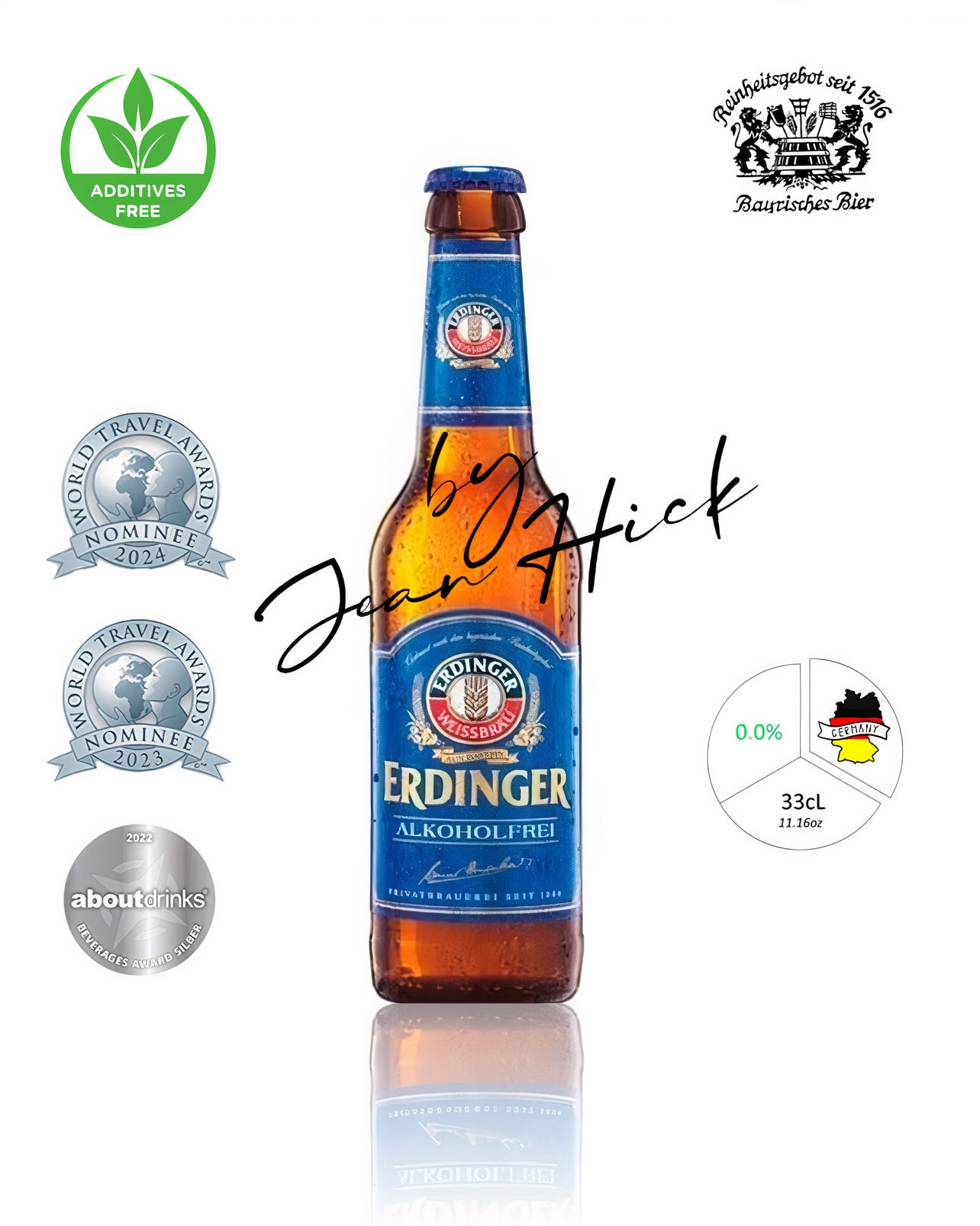
2022 - 2023 - 2024 Nominee for Europe's Leading Beer Tour Visitor Experience at the Annual WORLD TRAVEL AWARDS, London (UK). It's the most prestigious, comprenhensive and sought after awards programme in the global travel and tourism industry
2023
ABOUT-DRINKS Beverages Award, Paderborn (DE)
- Silver Medal
LEBENSMITTEL PRAXIS (German Trade Magazine), Neuwed (DE) - Product of the Year 2023 in the beer category
- Silver Medal
2022
ABOUT-DRINKS Beverages Award, Paderborn (DE)
- Gold Medal in the wheat beer category
- Silver Medal in the non-alcoholic beer category
- Silver Medal in the helles category
GETRÄNKE ZEITUNG (one of the most important and well-respected trade magazine in the German Beverage Industry), Neustadt an der Weinstraße (DE)
- Title "Beverage of the Year" in the non-alcoholic beer segment
THE FIZZZ AWARDS 2022 (compulsory reading for owners, managers and bar-tenders in the German Gastronomy sector)
- Newcomer of the Year Award
2018 - LEBENSMITTEL PRAXIS (German Trade Magazine), Neuwed (DE) - Product of the Year 2018 in the beer category
- Silver Medal