

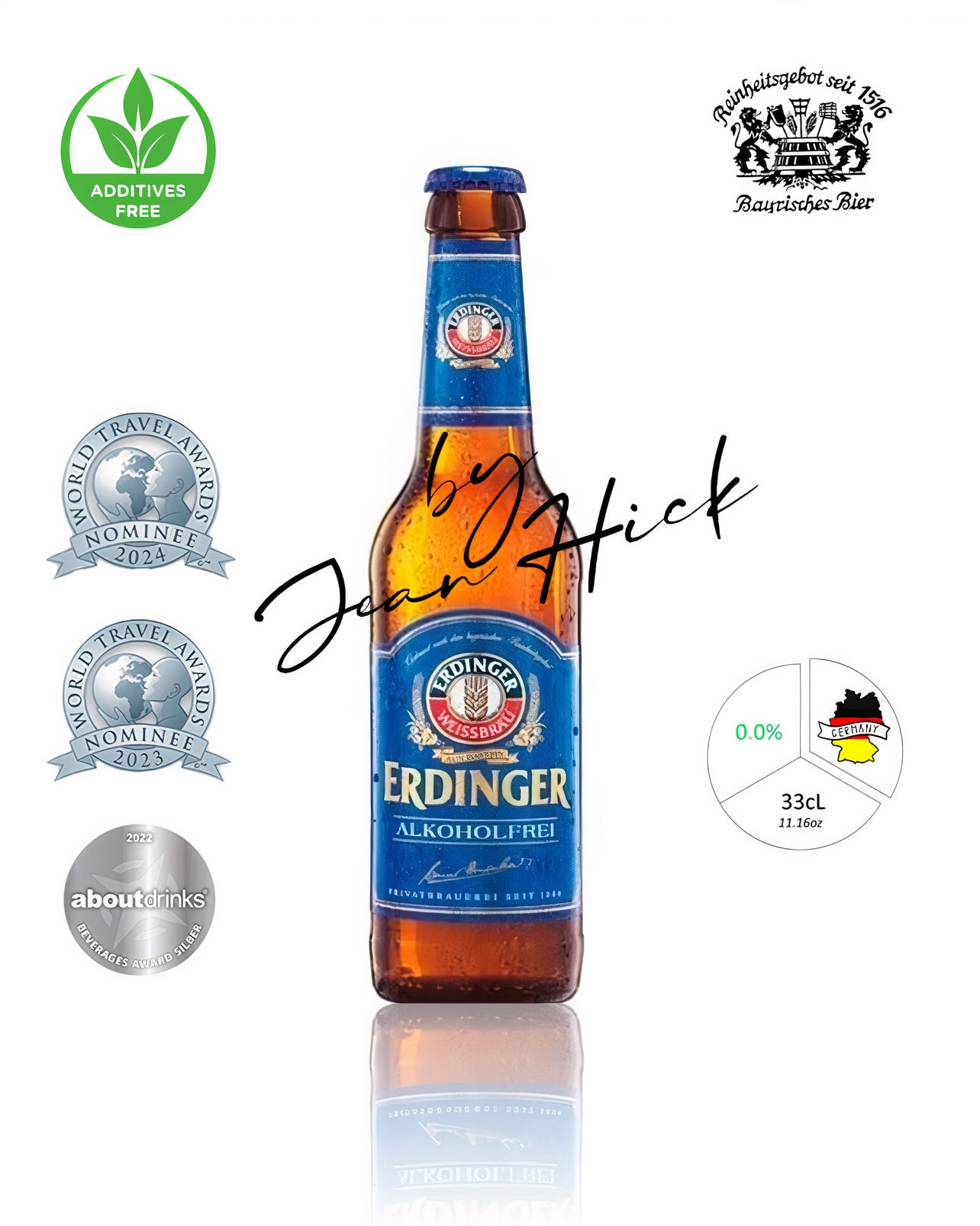
ERDINGER 0.0% 프리미엄 무알코올 아이소토닉 바이젠 🍺⚡
ERDINGER 0.0% 프리미엄 무알코올 아이소토닉 바이젠 🍺⚡
🌊 바이에른 알프스의 심장부, 오버바이에른 깊숙한 곳으로의 몰입.
에르딩어는 그 역사적인 양조장 깊은 곳에 숨겨진 가장 귀중한 비밀을 드러냅니다.
대대로 보호되어 온 두 개의 프라이빗 우물 — 수정처럼 맑은 생명의 원천 💦.
이 물은 단순한 원료가 아닙니다.
수 세기에 걸친 전통, 순수함, 그리고 장인정신을 담아내는 에르딩어의 심장입니다 🏰.
이 특별한 우물에서 흐르는 한 방울 한 방울에는
ERDINGER 0.0% 무알코올 바이젠의 DNA가 살아 숨 쉽니다.
1516년 라인하이츠게보트의 철학과, 마스터 브루어 가문의 열정이 빚어낸 황금빛 엘릭서 🍺.
운동선수, 미식가, 탐험가를 위한 선택.
이것은 단순한 음료가 아니라, 비타민 B군·가벼움·풍미가 하나로 어우러진
신체와 감각을 동시에 깨우는 아이소토닉 여정입니다 💪.
한 모금이 몸과 정신을 동시에 재생합니다.
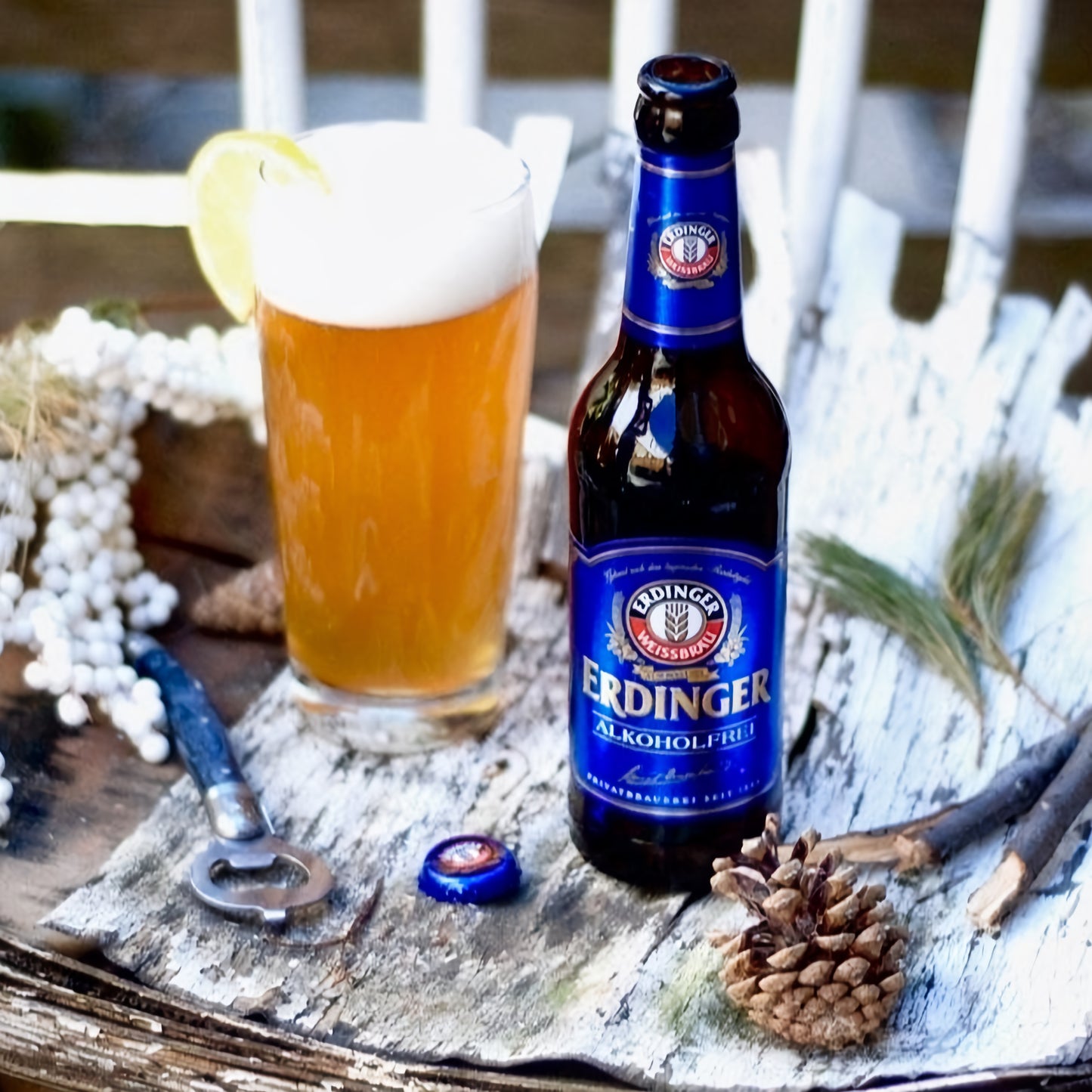
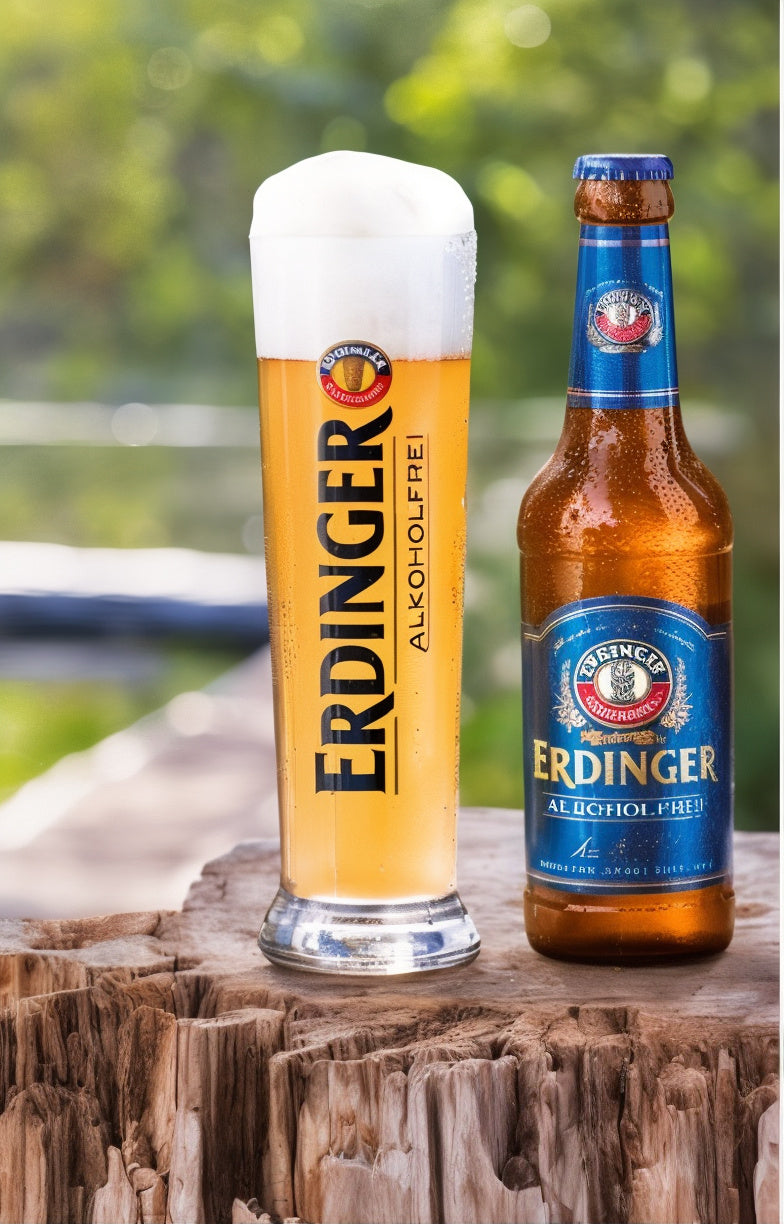
잘 익은 밀의 황금빛 색조,
풋사과와 헤이즐넛의 섬세한 아로마,
알프스 산봉우리처럼 조밀한 거품.
ERDINGER 0.0% 무알코올 바이젠은
무알코올 맥주가 예술이 될 수 있음을 증명합니다 🌟.

픽업 사용 가능 여부를 로드할 수 없습니다.
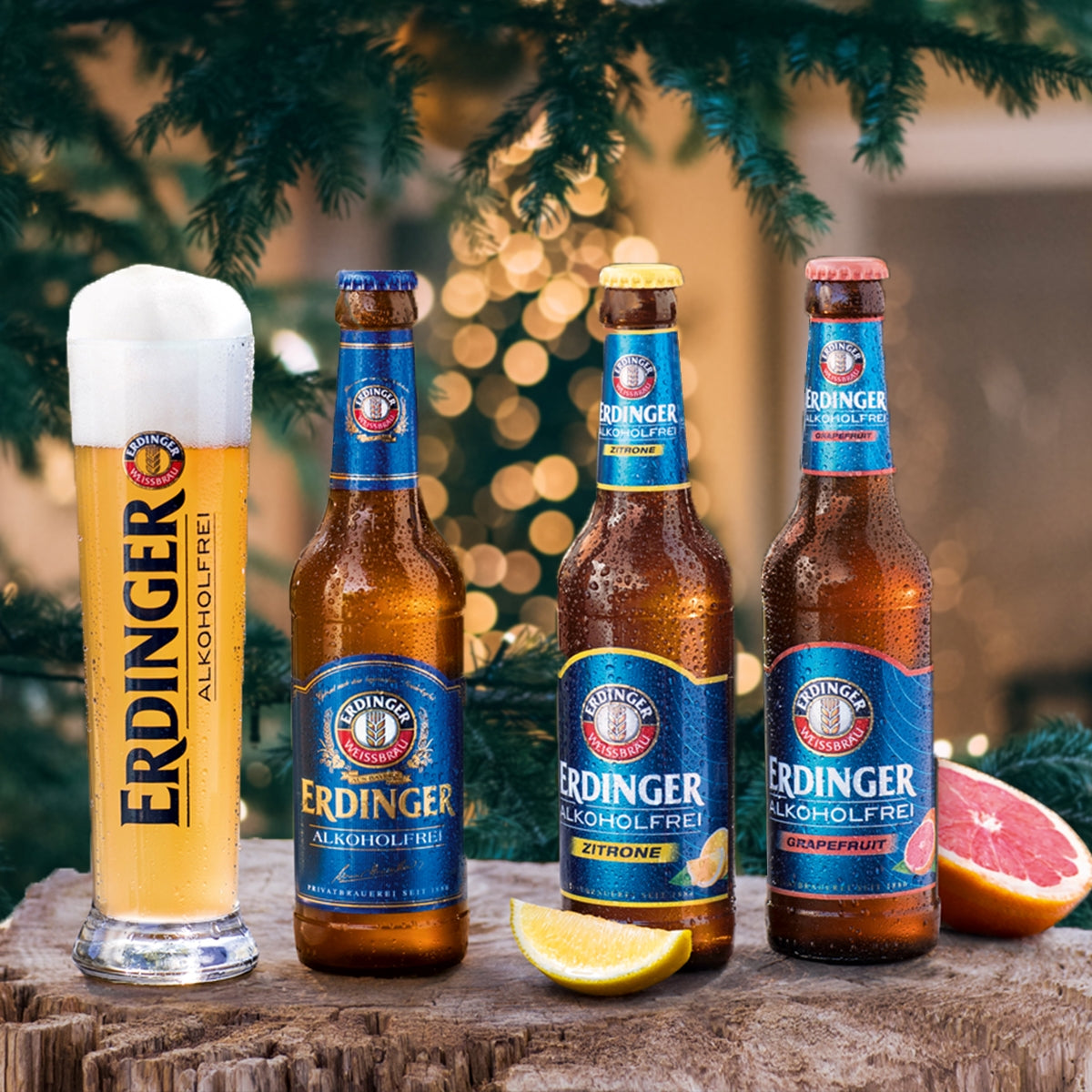
축소 가능한 콘텐츠
관능 프로파일
APPEARANCE 👁️
잘 익은 밀을 연상시키는 밝고 투명한 황금빛.
알프스 봉우리처럼 조밀하고 안정적인 크리미한 거품.
AROMA 👃
신선한 풋사과와 곡물의 부드러운 향.
은은한 헤이즐넛과 이스트 노트가 조화를 이루며 깨끗하고 정제된 인상을 남김.
PALATE 👄
가볍고 상쾌한 첫 터치.
아이소토닉 밸런스가 돋보이며, 밀의 고소함과 과일의 산뜻함이 균형 있게 펼쳐짐.
무알코올임에도 구조감과 깊이를 유지.
FINISH ✨
드라이하고 깨끗한 마무리.
섬세한 몰트 노트가 길게 이어지며 상쾌함과 만족감을 남김.
푸드 페어링 및 테이스팅 제안
🍽️ FOOD PAIRINGS & TASTING SUGGESTIONS
🥑 아보카도 통곡물 토스트 & 반숙 달걀, 핑크 페퍼
런던 스타일 브런치를 연상시키는 세련된 조합.
고소함과 부드러움이 바이젠의 산뜻한 과일 노트를 자연스럽게 끌어올립니다 🌆.
🥗 페타 치즈, 민트, 오렌지 제스트를 곁들인 파로 샐러드
가볍지만 풍미 있는 구성으로, 맥주의 시트러스한 청량감과 완벽한 하모니 🌿🍊.
🧀 부드러운 염소 치즈 또는 어린 아시아고
크리미하고 섬세한 질감이 맥아의 고소함과 은은한 과일 향을 우아하게 보완합니다 🧀🍺.
🥨 따뜻한 프레첼 또는 멀티그레인 플랫브레드
루프탑 아페리티보나 캐주얼한 어반 런치에 어울리는 클래식한 맥주 가든 페어링 ☀️.
🍏 사과 & 시나몬 타르트
바이젠 특유의 사과와 향신료 뉘앙스를 자연스럽게 확장하는 감각적인 마무리 🍎✨.
🌡️ 이상적인 서빙 온도 : 6–7 °C.
✔️ 과일 향, 밸런스, 거품의 질감을 최적으로 표현
❌ 5 °C 이하 : 향이 억제되고 쓴맛이 강조됨
❌ 8 °C 이상 : 신선함이 둔화되고 단맛이 두드러짐
원재료, 영양 성분 및 병 사양
성분 :
정제수, 밀 맥아, 보리 맥아, 홉, 효모, 이산화탄소
알레르겐 :
보리, 밀
영양 정보 (100ml당) :
에너지 : 107 kJ / 25 kcal
빵 단위 : 0.45 BE
지방 : 0 g
> 포화지방 : 0 g
탄수화물 : 5.3 g
> 당류 : 3.6 g
단백질 : 0.4 g
소금 : 0 g
알코올 함량 : <0.5%
IBU : 17
엽산(비타민 B9) : 10 μg (5%)
비타민 B12 : 0.13 μg (5.2%)
폴리페놀 : 30 mg
포장 사양 :
용량 : 0.33 L
규격(가로 x 세로) : 6 x 24 cm
포장 유형 : 다크 브라운 유리병
마개 : 크라운 캡
* 일일 기준치 비율은 2,000 kcal 기준이며, 개인의 필요 열량에 따라 달라질 수 있습니다.
개봉 후 보관 기한 :
개봉 당일 섭취 권장
제조 공정 및 탈알코올화 방식
Erdinger is the typical German, or rather, Bavarian wheat beer. Erdinger is brewed by the brasserie of the same name according to the specification issued in Bavaria back in 1516 to defend the authenticity of beer (Reinheitsgebot seit 1516, the only ingredients used for the brewing of beer must be Barley, Hops and Water). For more than two centuries, the Bavarian royal families had a monopoly on production and the court breweries became the place where brewing methods were studied and perfected. The Erdinger Weissbier brand is still synonymous with typical Bavarian beer today.
This is the typical German, or rather, Bavarian wheat beer. Erdinger is brewed by the brasserie of the same name according .
Erdinger uses only high-quality raw materials starting with the water, which is drawn from two private wells within the brewery. The pleasure experience is completed by the stimulating bitterness of the hop aroma and a touch of a light fruity acidity. This is completed by the fine sparkling carbonic acid.
제조사 및 브랜드 역사
In 1886, the 'Weisse Bräuhaus' was founded by Johann Kienle in Erding, in the heart of Upper Bavaria about 30 km north-east of Munich, Germany. In 1930 the brewery is bought by the malt factory F.W. Otto. In 1935 the Managing Director at the time, Franz Brombach, is offered the opportunity to buy the brewery. Annual wheat beer production at the time is around 3,500 hectoliters (hl). In 1949 Franz Brombach names the brewery Erdinger Weißbräu. In 1965 the company is racing ahead: annual production rises to around 40,000 hl. The brewery’s current owner, Werner Brombach, joins the company. His declared intention is to gradually establish and successfully market a nationwide wheat beer brand. In 1971 a successful advertising campaign is launched for the Erdinger Weissbier brand, focusing on its "high quality standards" as a "traditional Bavarian specialty". The new Erdinger jingle "Des Erdinger Weissbier, des is hoid a Pracht..." becomes a German advertising classic. In the 1970s Austria and Italy became Erdinger’s first wheat beer export nations. Today, the mid-size private brewery exports its specialties to 100 countries on five continents. In 1975 following the death of his father, Werner Brombach takes over the family business. Two years later, output reaches around 225,000 hl and Erdinger is market leader. In 1983 a new brewhouse is constructed on the edge of town – there is no longer enough space at the company’s historic base in the middle of the Old Town. Capacity is now almost 600,000 hl, but a second building is soon needed to expand capacity further. In 1990 Erdinger passes the magic 1-million hectoliter mark for the first time! In 2001 repositioning of Erdinger Alkoholfrei as an isotonic thirst-quencher for sports enthusiasts. Just five years later, Erdinger Alkoholfrei is the market’s number 1 Alkoholfrei beer. In 2008 after two years of construction, the Erdinger Weißbräuhof is re-opened. The Brombach family’s faithfully restored base is now home to the brewery’s HQ, a pub and a four-star hotel. In 2016 130-year brewery anniversary: Erdinger Weißbräu has stood for cultivated Bavarian wheat beer enjoyment and maximum enjoyment for 130 years now. In 2017 the new bottling plant goes into operation. Two new bottling lines and the modernization of an existing line create additional capacity: up to 165,000 bottles can be filled per hour. In 2019 big bang at the 80th birthday party of Erdinger owner Werner Brombach: Jürgen Klopp (football coach - Liverpool, Borussia Dortmund, Mainz 05 - and former German footballer - Mainz 05, Rot-Weiss Frankfurt, Eintracht Frankfurt II, 1.FC Pforzheim) becomes a new ambassador of the private brewery. In 2021 total sales are 1.5 million hectoliters of beer (2020). Erdinger is the largest family-owned wheat beer brewery. For over 130 years, Erdinger Weissbräu has stood for carefully nurtured Bavarian wheat beer culture and perfect enjoyment.
We are talking about the largest producer of Weizen not only in Germany, but also in the world, with a presence in the most diverse corners of the world thanks to the constant activity of its brewing rooms and fermenters, from which millions of hectolitres flow annually.
인증
The actual history of wheat beer, as we know it today, began around 500 years ago. At the time, beer made from wheat was quite controversial as this grain was mainly needed for baking bread. From 1567 onward, the use of wheat for brewing beer was forbidden throughout the Duchy of Bavaria. There was just one exception: the Degenbergers in the Lower Bavarian town of Schwarzach were permitted to brew wheat beer by a privilege granted by the Duke of Bavaria in 1548. When the last Degenberger died without an heir in 1602, this right to brew wheat beer reverted to Duke Maximilian. He was thus unrivaled in its own territory, as wheat beer brewing was still taboo for all others. Over time, a number of electoral breweries emerged throughout the country in which the local rulers were allowed to have wheat beer brewed on payment of a special duty. The Wittelsbach family earned a lot of money with this wheat beer monopoly, which they used to finance their lavish state budget.
Top-fermenting wheat beer also had a practical advantage. It can withstand higher ambient temperatures during the brewing process. Unlike bottom-fermenting beer, it could therefore also be brewed in summer. It was only when new brewing techniques led to an improvement in the quality of brown beers in the mid-18th century that wheat beer became “common”, i.e. no longer a royal privilege. In addition to the aristocracy, all licensed brewers throughout the land were now permitted to brew wheat beer.
Bavaria has always been a wheat beer stronghold. 90 percent of all wheat beer sold in Germany comes from the Free State. Around 1,000 different brands are brewed here. Wheat beer has been the most widely brewed Bavarian beer since 1994 – currently accounting for 35 percent of the state’s total beer output. By comparison: in 1960, it accounted for just three percent. The specialty beer has thus had an amazing success story over the past decades, and has long become a firm favorite beyond the so-called “white sausage equator” in Germany and abroad.
Purity Law
Erdinger Weißbräu is a staunch defender of Bavaria’s Purity Law. We’ve never used anything else to brew our Erdinger wheat beers than the pure natural ingredients water, malted wheat and barley, hops and yeast – in strict compliance with the Bavarian Purity Law.
We guarantee that no chemicals, artificial colorings and aromas, or any other additives are used in the production of Erdinger wheat beers – only Bavarian brewing skills and the highest quality standards.
Brewing purely with the basic ingredients
There have been numerous brewing regulations over the ages. They all set out to protect the consumer of the finished product – the beer drinker. The main aim was to ban the addition of harmful substances. Brewing should be limited to just a very few basic ingredients.
One of the oldest historic laws for the production of beer is the brewing regulation issued by the Duchy of Bavaria-Landshut in 1493. This states that only water, hops and malt may be used. The most famous brewing law, however, is the edict of Wilhelm IV on April 23, 1516 on the occasion of a meeting of the Assembly of Estates, at Ingolstadt, north of Munich and for the entire Duchy of Bavaria. The original text says that “We wish…forthwith that…in all our towns and markets and in the countryside no other items be used for beer than barley, hops, and water.” Since then, this decree has gone through many iterations, revisions, and amendments, and is now part of the modern German tax law, where it resides under the frightfully convoluted title of “Section 9 of the Public Notice concerning the Amendment of the Provisional Beer Law dated July 29, 1993.” The Purity Law may be almost 5 centuries old, but its current name of Reinheitsgebot is of much more recent vintage. That term was coined on March 4, 1918, by an obscure member of the Bavarian State Parliament, Hans Rauch, during an impassioned debate about beer taxation. Before then, the law had simply been known by the prosaic name of "Surrogatverbot” (surrogate, or adjunct, prohibition). Because of its longevity, the Reinheitsgebot is now considered the world’s oldest, still valid food safety and consumer protection legislation.
If you see the seal of quality stating “brewed in accordance with the Purity Law” on the beer you’re buying, then pure beer enjoyment is guaranteed!
수상 및 메달
2022 - 2023 - 2024 Nominee for Europe's Leading Beer Tour Visitor Experience at the Annual WORLD TRAVEL AWARDS, London (UK). It's the most prestigious, comprenhensive and sought after awards programme in the global travel and tourism industry
2023
ABOUT-DRINKS Beverages Award, Paderborn (DE)
- Silver Medal
LEBENSMITTEL PRAXIS (German Trade Magazine), Neuwed (DE) - Product of the Year 2023 in the beer category
- Silver Medal
2022
ABOUT-DRINKS Beverages Award, Paderborn (DE)
- Gold Medal in the wheat beer category
- Silver Medal in the non-alcoholic beer category
- Silver Medal in the helles category
GETRÄNKE ZEITUNG (one of the most important and well-respected trade magazine in the German Beverage Industry), Neustadt an der Weinstraße (DE)
- Title "Beverage of the Year" in the non-alcoholic beer segment
THE FIZZZ AWARDS 2022 (compulsory reading for owners, managers and bar-tenders in the German Gastronomy sector)
- Newcomer of the Year Award
2018 - LEBENSMITTEL PRAXIS (German Trade Magazine), Neuwed (DE) - Product of the Year 2018 in the beer category
- Silver Medal